Reading method
A barcode reader must see the label. RFID is read by radio frequency; with proper antenna and power settings, contactless reading can happen through cartons, shelves or gate transitions.
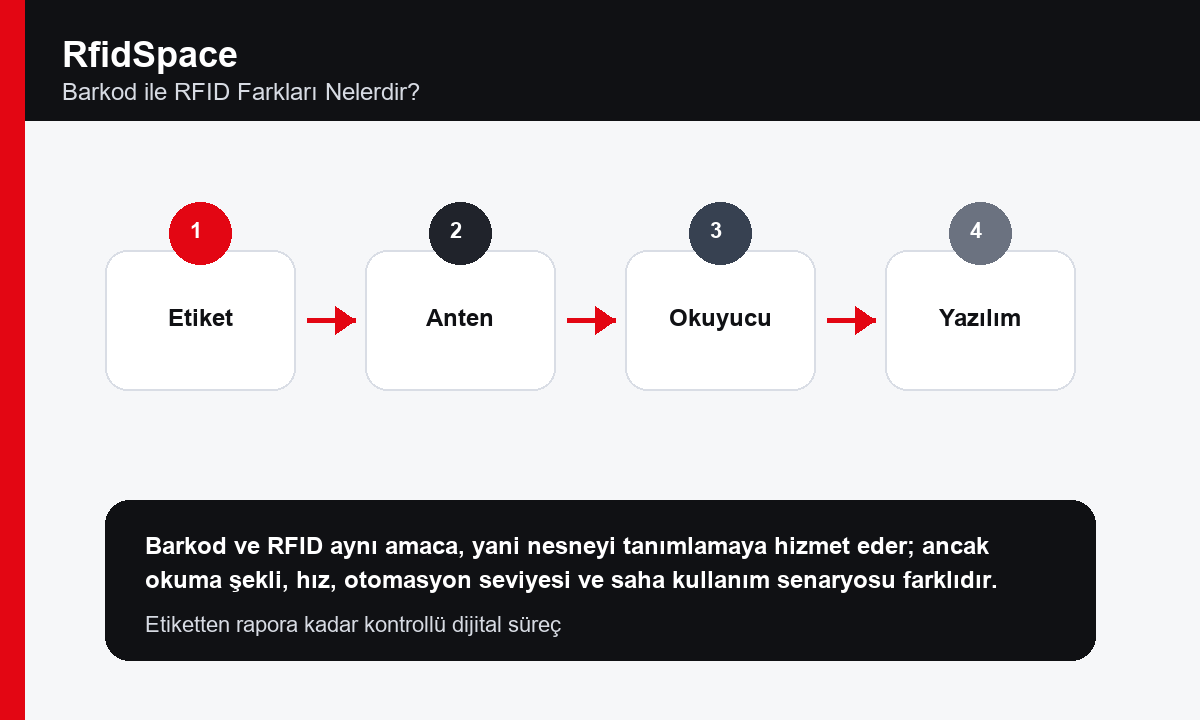
Barcode and RFID both identify objects, but their read method, speed, automation level and field use cases differ.
RFID moves operational data from manual entry into real-time tracking, validation and reporting layers.
A barcode reader must see the label. RFID is read by radio frequency; with proper antenna and power settings, contactless reading can happen through cartons, shelves or gate transitions.
Barcodes are usually scanned one by one. RFID can read many tags at once, which is valuable in high-volume counting, dispatch and receiving processes.
Barcode labels are very inexpensive and enough for simple workflows. RFID tags and readers cost more, but speed, accuracy and loss reduction can justify the investment in high-volume operations.
Barcodes can be affected by dirt, damage or viewing angle. RFID tag selection must consider metal, liquid, textile, plastic and outdoor conditions.
Barcode and RFID are often complementary rather than rivals. Barcode can support item cards, documents and single verification; RFID can handle bulk counts and gate validation.
| Kriter | Barcode | RFID |
|---|---|---|
| Okuma şekli | Görüş hattı gerekir | Radyo frekansı ile temassız okuma |
| Okuma hızı | Tek tek okuma | Toplu okuma |
| Etiket maliyeti | Düşük | Etiket tipine göre daha yüksek |
| Operasyon değeri | Tekil doğrulama | Count, geçiş, izlenebilirlik ve otomasyon |
The right RFID architecture depends on tag type, read distance, environment, quantity, integration and workflow goals.